


Causes of insomnia disorder and how it develops
What causes insomnia disorder?
Insomnia can be a symptom (that is, trouble falling asleep or staying asleep) OR it can be a disorder (when there are daytime complaints and the insomnia becomes frequent and chronic).
In the weeks in which insomnia starts to become more regular, something we call “hyperarousal” occurs. Think of hyperarousal like a car whose engine idles higher —it keeps running even when you’re trying to rest. This heightened state makes you feel less sleepy, which can help you function during the day, but it also makes it much harder to fall or stay asleep at night. People with insomnia often describe this feeling as being “tired but wired.”

Insomnia can be a symptom (that is, trouble falling asleep or staying asleep) OR it can be a disorder (when there are daytime complaints and the insomnia becomes frequent and chronic).
In the weeks in which insomnia starts to become more regular, something we call “hyperarousal” occurs. Think of hyperarousal like a car whose engine idles higher —it keeps running even when you’re trying to rest. This heightened state makes you feel less sleepy, which can help you function during the day, but it also makes it much harder to fall or stay asleep at night. People with insomnia often describe this feeling as being “tired but wired.”

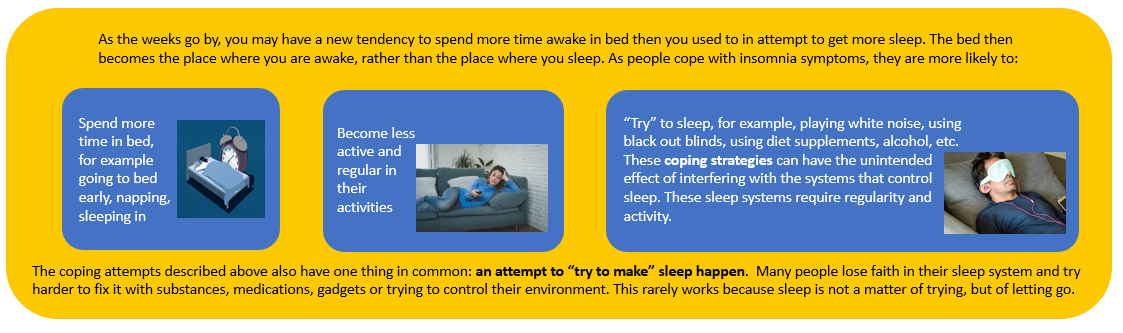
The hyperarousal that appears when the insomnia becomes chronic
The repeated pairing of the bed with sleeplessness — so that getting into the bed makes you feel immediately alert
Less activity, less regularity and/or more time in bed — all behaviors that interfere with your sleep system. Trying to sleep — instead of trusting your sleep system


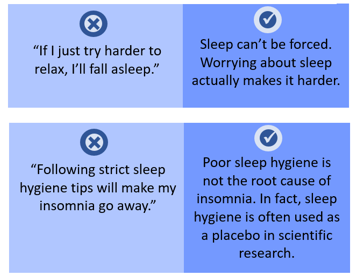
This is good news because it means you can fix it by learning about your sleep systems and how to get them to work for you, along with some tricks to reverse hyperarousal and the association of your bed as “the place you are awake.”

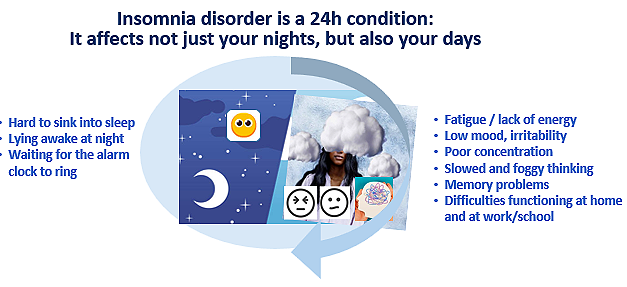
It’s a sleep disorder, but it feels like if affects me all the time!
Exactly. Even though insomnia arises from nighttime issues, its fingerprints are all over the daytime too.
If you have insomnia disorder, you feel clear impacts of this lack of sleep during the day. For instance, you may be exhausted, yet unable to nap. You may feel like you have no energy and that everything requires more effort. Your thinking skills may become less reliable, with a foggy mind, poor concentration, and memory problems. Your mood may switch to the low side and perhaps you become more irritable than usual. This can put a strain on your relationships, your performance at work or at school, and your overall quality of life.
This is the focus of a treatment called Cognitive Behavioral Therapy (CBT)
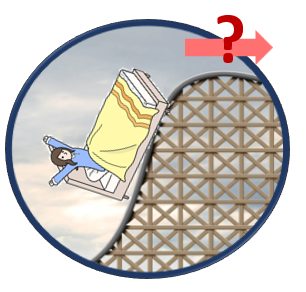
Having insomnia doesn’t mean every night is sleepless. In any given week, you probably have some bad nights and some better nights.
This unpredictability is tough. Not knowing if you’ll get rest — especially before a big day — can create a ton of stress at bedtime. The more you worry about sleep, the harder sleep tends to come.
Yet, the reality is that the dynamics of insomnia are often unpredictable.
It is common to worry that your insomnia may be different or not treatable. It is common to worry that insomnia can’t be treated, especially if you’ve been living with it for a long time. Sadly, it is not rare for people to suffer from insomnia for 10 years before receiving effective treatment.

add link to previous page

I thought I beat it, but now it’s back again!
Insomnia tends to come and go. Sometimes you’ll have weeks or months of decent sleep, only to see the old pattern return. This is very common.
Don’t jump to conclusions too quickly though! This may be just a bout of normal short-term insomnia. Only time can tell if you are on your way to another episode of chronic insomnia.
Even if you are, it doesn’t mean you have to be back to square one when this happens. Once you learn effective tools to manage insomnia, you’ll be much better equipped to calm future flare-ups before they take over.
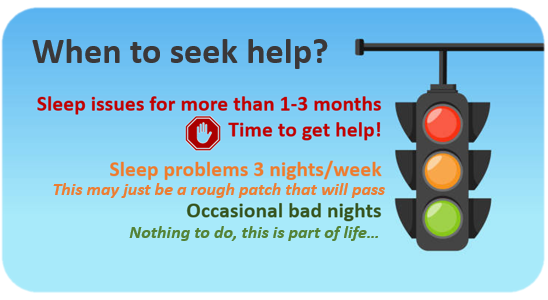
Another reason for worrying your insomnia is not treatable can occur when you have another condition along with your insomnia, including medical disorders, like cancer, or mental health challenges like anxiety or depression. You may also think that insomnia is inevitable because you are getting older or going through menopause. Whether someone has insomnia disorder only or another condition on top of insomnia disorder, the insomnia symptoms are the same, and the insomnia treatment is the same.
Keep in mind! Because some of the daytime effects of insomnia disorder are the same as they are in some of these other conditions (e.g., fatigue, concentration problems and mood disruptions), many people, including health providers, can mistakenly think it is not insomnia disorder.
If you have had sleep issues for more than 1 month, the fact that you also have another condition does not change that you have an insomnia that warrants treatment.
add link to next page
Insomnia is not your fault. Your body and brain are not ‘broken.’ They just need some retraining.
All in all, insomnia disorder is not just about losing sleep. It’s about how much sleep loss changes the way you live your life.
Why does my sleep feel so unpredictable?
When left untreated, insomnia disorder often sticks around, sometimes for years.
With the right help, you don’t have to just “live with it.”
Is my insomnia different?